Oncology
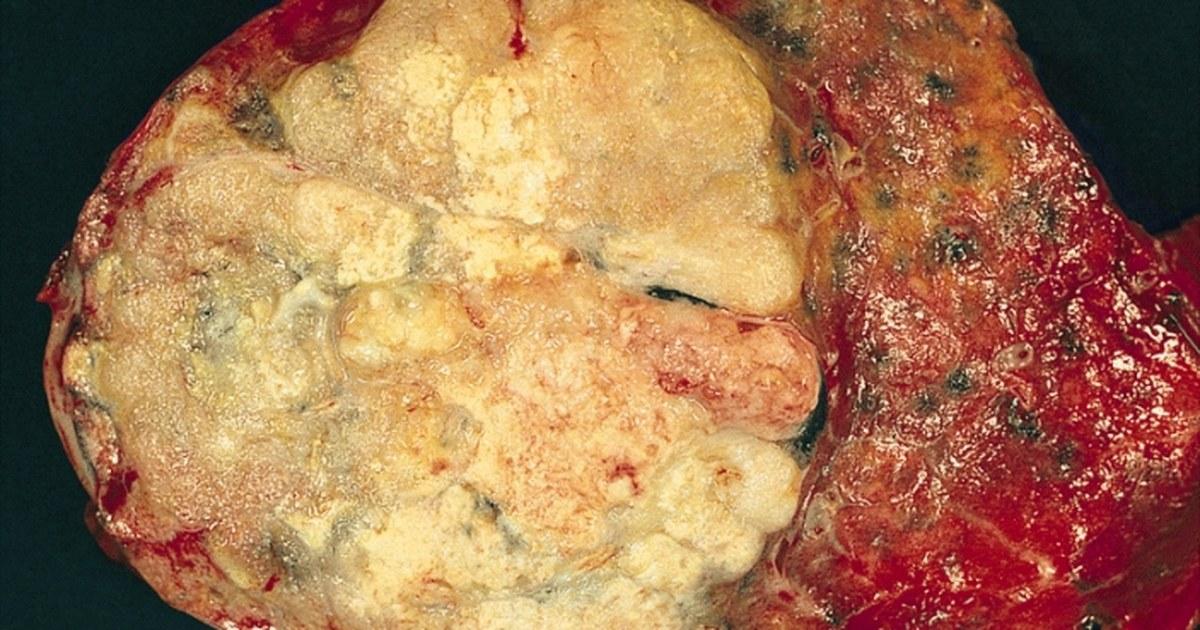
Table of contents


 Alexei Peter dos Santos, Thiago Longo Moraes, and Caroline Wilhelmsen Martins
A 61-year-old woman who never smoked undergoes a CT scan for persistent cough. The exam shows a 4.5 cm nodule in the right upper lobe and an enlarged lymph node in the mediastinum. PET with CT shows uptake in the tumor and in that lymph node. A CT-guided needle biopsy confirms adenocarcinoma, but the material is small. The surgeon suggests operating soon. The oncologist prefers to start immunotherapy with chemotherapy before surgery. The molecular panel request comes back from the laboratory with the note "insufficient material". No one requested the puncture of the mediastinal lymph node. The scene is fictional and was written for teaching.
This text uses the case as a scenario for clinical reasoning for students and health professionals. The central question is why, in lung cancer, the multidisciplinary team needs to see the case before any treatment, and not after. The answer depends on three clues: how much tissue there is and what for, what the molecular test changes and who defines whether the tumor can be operated on. If you play the case of the day in NEXO, you will recognize the logic: a new clue changes the weight of the others.
Main points
Lung cancer is a disease in which several decisions depend on one another. The type of biopsy defines whether there will be enough tissue for molecular testing. The molecular result defines whether immunotherapy makes sense. Staging of the mediastinum defines whether surgery is the first step. When each specialist decides alone, in the order in which the patient reaches them, these dependencies are lost.
The scene shows three decisions made separately: the biopsy by the radiologist, the surgical proposal by the surgeon and the proposal of systemic treatment by the oncologist. Each one makes sense on its own. Together, they leave the patient without staging of the mediastinum and without a molecular result. The reasoning calls for asking, before the first biopsy: what do I need to know to decide the treatment, and which procedure gives me everything at once?
The text does not detail treatment regimens, radiotherapy techniques or lung cancer screening. It also does not compare the various perioperative immunotherapy options. The focus is the timing and the order of decisions at the start of care. Each patient's management follows the service protocol and the team's decision.
The multidisciplinary team, or tumor board, is the meeting in which the professionals who care for the patient discuss the case and decide the plan together.
A review on the care of early lung cancer in low- and middle-income countries describes that the team usually includes a pulmonologist, a clinical oncologist, a radiation oncologist, a thoracic surgeon, a pathologist, a thoracic radiologist, a nuclear medicine physician, a palliative care physician, a clinical pharmacist and nursing staff (Araujo et al., 2026). The same review links presentation of the case to the team with faster diagnosis and staging, more surgeries and better survival in early lung cancer.
Most decisions that change treatment happen before the first treatment: which biopsy to do, which staging to complete, which molecular test to order and whether surgery comes first. Discussing the case only after surgery, or after the first cycle, leaves the team correcting the path instead of choosing it. The same review notes that 5-year survival is 92 percent in stage IA1 and 36 percent in stage IIIA (Araujo and colleagues, 2026), and it is precisely at the boundary between these stages that mediastinal staging matters.
The pathologist is often the least visible professional on the team, but it is the pathologist who decides whether the material is suitable for diagnosis, for immunohistochemistry and for the molecular test. A review on EGFR testing in early cancer argues that EGFR mutation testing should be done reflexively, that is, automatically, on biopsies, cytology samples and surgical specimens of all non-squamous types (Hofman, 2021). The same author notes that this strategy increases laboratory workload and depends on funding, which makes the conversation with the pathologist part of the planning.
The biopsy from the scene confirmed the cancer, but it provided no material for the molecular test and did not study the mediastinum. A single well-chosen procedure could have done all three things.

Needle sampling guided by endobronchial ultrasound, endobronchial ultrasound, reaches the mediastinal lymph nodes. At a center in the United States, of 263 non-small cell lung cancer samples obtained this way and tested for PD-L1, 237, or 90.1 percent, were considered adequate (Khoury and colleagues, 2024). Adequacy was higher in squamous cell carcinoma, at 93.2 percent, than in adenocarcinoma, at 87.6 percent. The service protocol was followed in 84 percent of procedures, but following it did not improve the result; in adenocarcinoma, lesion size and location mattered more (Khoury and colleagues, 2024). At least 100 viable tumor cells are needed to assess PD-L1, so it is worth agreeing beforehand how much material will be collected and what for.
The same Canadian study showed another effect of ordering the right test early. Of the 90 patients with advanced non-squamous disease, 21, or 23 percent, started targeted therapy before the tissue result was ready, and 11, or 12 percent, had actionable alterations found only in blood (García-Pardo and colleagues, 2023). Patients with an actionable alteration in blood were referred to the oncologist faster. This kind of flow only works when someone decides, at the start, who orders the test and who receives the result.
If the team had discussed the case before the biopsy, the likely choice would have been endobronchial ultrasound with sampling of the mediastinal lymph node. This single exam could confirm the cancer, show whether there was disease in the mediastinum and provide material for the molecular panel. The note "insufficient material" is often the result of a question nobody asked before the procedure.
Knowing whether there is cancer in the mediastinal lymph nodes, stage N2, defines whether surgery is the first step, whether it comes after neoadjuvant treatment or whether the path is chemoradiotherapy.
A Turkish study with 114 patients who underwent PET and endobronchial ultrasound before the meeting compared each exam with the team's final classification. The team classified 73.7 percent as N2 or N3. Relative to this classification, PET overestimated the stage in 14.0 percent and underestimated it in 7.9 percent. Endobronchial ultrasound underestimated the stage in 15 of the 43 patients it classified as N0 or N1, or 34.9 percent (Terzi and colleagues, 2026). No exam alone settles the question; the team puts the pieces together.
PET can show uptake in inflamed lymph nodes, and the biopsy may miss the diseased node. When a negative result changes the plan to direct surgery, it is worth asking whether it is reliable enough for that. This is one way to handle diagnostic uncertainty without falling into paralysis.
In the scene, the oncologist wants to start immunotherapy with chemotherapy before surgery. This proposal has a strong basis, but it requires information that does not yet exist.
CheckMate 816 randomized 358 patients with resectable lung cancer to receive nivolumab at a dose of 360 mg with platinum-based chemotherapy every 3 weeks for three cycles before surgery, or chemotherapy alone. Median event-free survival was 31.6 months versus 20.8 months, and pathological complete response was 24.0 percent versus 2.2 percent. Surgery was performed in 83.2 percent of the nivolumab group and 75.4 percent of the chemotherapy-alone group (Forde et al., 2022). One point weighs on the scene: patients with known EGFR mutations or ALK translocations were excluded.
The nivolumab label contains two neoadjuvant indications in resectable lung cancer, for tumors of 4 cm or more or with positive lymph nodes. The one that includes immunotherapy also after surgery is restricted to patients without a known EGFR mutation or ALK rearrangement (Opdivo label, FDA, 2026). For those with an EGFR mutation, there is another path: the osimertinib label approves use after tumor resection in patients with exon 19 deletion or L858R mutation in exon 21, at a dose of 80 mg orally once daily for up to 3 years (Tagrisso label, FDA, 2026). A recent synthesis on stage III summarizes that, for tumors with a treatable oncogenic alteration, resection followed by adjuvant targeted therapy remains the preferred strategy (Yıldız et al., 2026).
A woman who never smoked, with adenocarcinoma, is exactly the profile in which the molecular result can change the plan. Starting immunotherapy before that result may mean treating with the wrong drug and missing the window for surgery with the right therapy afterward. The reasoning is not "immunotherapy or not", but "what information is missing to choose".
The Canadian ACCELERATE study tested tumor DNA in blood even before tissue diagnosis in 150 patients with suspected advanced lung cancer. The molecular result from blood came back in a median of 7 days, versus 23 days for tissue sequencing, and time to treatment was 39 days, versus 62 days in a reference group (García-Pardo et al., 2023). The study was done in advanced disease, but it shows how ordering the right test early shortens the path. A negative blood result does not exclude the mutation, and tissue is still necessary.
Treatment before surgery is not risk-free. In CheckMate 816, grade 3 or 4 treatment-related serious adverse events occurred in 33.5 percent of the nivolumab group and 36.9 percent of the chemotherapy-alone group. Surgery was cancelled in 15.6 percent and 20.7 percent, respectively, and disease progression explained 6.7 percent and 9.5 percent of these cancellations (Forde et al., 2022). The authors themselves report that the proportion of delayed surgeries was similar in both groups. For the team, the message is that the surgeon needs to know the plan from the first cycle, so that surgery happens in the expected window, which in the study was up to 6 weeks after treatment.
Resectable seems like a technical and objective word, but specialists disagree considerably about it, especially when there is N2.
A survey of 68 specialists, most from Europe, presented seven cases of stage II and III lung cancer. Resectability was widely accepted in N0 and N1 cases and in some single-station N2 cases, but dropped sharply in multi-station N2 and in T3 and T4 tumors with N2. The greatest variation appeared precisely in these borderline cases, where specialists diverged between surgery-based and chemoradiotherapy-based paths (Lampridis et al., 2026). The authors concluded that clearer multidisciplinary criteria are lacking.
The American CHIO3 study included only patients with biopsy-proven N2, treated with four cycles of chemotherapy with durvalumab before surgery. Of the 37 patients, 30 underwent surgery, 93.3 percent with clear margins, with no deaths at 30 and 90 days. Surgery was considered more difficult in 46.7 percent, and the median interval between the end of neoadjuvant treatment and surgery was 46 days (Martin et al., 2026). The finding shows that the surgeon needs to be in the plan from the start, and not be called only when treatment ends.
The same summary on stage III recalls that, for unresectable disease, definitive chemoradiotherapy followed by consolidation durvalumab is the standard, based on the PACIFIC study. Patients with limited N2 can have good results with surgery-based strategies, while those with bulky disease or disease in several mediastinal stations often need intensified systemic treatment or definitive chemoradiotherapy (Yıldız et al., 2026). In the survey with specialists, cases considered unresectable were often associated with concurrent chemoradiotherapy (Lampridis et al., 2026). This choice needs the radiation oncologist at the table from the beginning.
| Decision | Central question | Who takes part | Main source |
|---|---|---|---|
| Type of biopsy | Can one procedure provide diagnosis, staging and molecular material? | Pulmonologist, radiologist, pathologist | Khoury et al. |
| Mediastinal staging | Is there N2 disease, and do the tests agree? | Nuclear medicine physician, pulmonologist, surgeon | Terzi et al. |
| Molecular testing | Are EGFR, ALK and PD-L1 ready before treatment? | Pathologist, oncologist | CheckMate 816 and package inserts |
| Resectability | Is surgery possible now or after neoadjuvant treatment? | Surgeon, oncologist, radiation oncologist | Lampridis et al. |
| Time to treatment | How can the path be shortened without skipping steps? | The whole team | ACCELERATE |
Putting together a multidisciplinary team is not enough for it to work. The review on low- and middle-income countries describes that lung cancer is often found late, because it has few early symptoms, and that barriers include limited access to recommended treatments, fragile referral pathways, lack of screening programs and large differences in the availability of biomarker tests (Araujo et al., 2026). The authors argue that identifying and reporting these barriers is the first step to correcting them.
Reflex molecular testing also has a cost. The review on EGFR testing in early-stage cancer discusses that sequencing as a reflex test has a strong impact on the cost of molecular tests and that the decision depends on how each institution, region or country reimburses (Hofman, 2021). The same author recalls that EGFR mutations can be tested in cytological samples before surgery, but that a negative result calls for a new analysis on the surgical specimen. In practice, the team needs to combine not only what to order, but also where and with what resources.
In lung cancer, the errors at the start are silent. They show up weeks later, as a repeated biopsy, a postponed surgery or a changed treatment. The most common errors recall those that appear in clinical decision-making.
The patient first reaches one specialist, and that specialist decides the first step. This shortcut, natural in routine practice, is what the multidisciplinary team tries to avoid. A diagnostic pause before the first procedure helps to ask whether the case has already been discussed.
Starting immunotherapy without knowing EGFR and ALK status repeats the mistake of that scene. The haste is understandable, but the trial that supports the treatment excluded these patients, and the label restricts one of the indications to those who do not have these alterations.
A negative PET in the mediastinum or a negative puncture can be wrong, as the comparison with the team's decision showed (Terzi et al., 2026). When the result changes the plan, it is worth confirming.
The variation among specialists shows that resectability is a decision, not a given. It needs to be discussed with the surgeon, oncologist and radiation oncologist together, as in interprofessional clinical reasoning.
The onset of lung cancer is a good example of a case where the order of the clues changes the outcome. In NEXO, the case of the day works with progressive clues, and practicing the question "what do I need to know before deciding?" on short cases helps you ask the same question at the tumor board. The method relies on learning based on clinical cases.
You can also practice building hypotheses with the text on differential diagnosis with clues. Those who create cases can contribute through the Creators page.
Because the biopsy determines whether there will be material for diagnosis, staging and molecular testing. A well-chosen procedure avoids repeating exams and delaying treatment.
A review on the topic argues for reflex testing in all non-squamous types (Hofman, 2021). The result changes treatment in both early and advanced disease.
No. It can give the molecular result faster, but a negative result does not rule out the mutation, and tissue is still needed for diagnosis and other tests.
It is the presence of cancer in the mediastinal lymph nodes on the same side as the tumor. This finding changes the treatment path and is where specialists diverge most about resectability.
The team, with the thoracic surgeon at the center, but with the oncologist, radiation oncologist, radiologist and the patient themselves. The survey with specialists showed great variation in borderline cases (Lampridis et al., 2026).
Want to practice reasoning with progressive clues? Play the case of the day.
